
Pompeii vs. Herculaneum: key differences every traveler should know
When we think of the eruption of Mount Vesuvius, both cities immediately come to mind. They were both buried by this natural disaster in 79 AD, and today they allow us to walk along almost intact Roman streets, opening a remarkable window into the past. However, although they are often mentioned together, there are important differences between Pompeii and Herculaneum—and we would like to help you discover them.
Two cities, one volcano, and very different destinies
Pompeii and Herculaneum (along with other cities such as Stabiae and Oplontis) shared the same fate, but they did not experience it—or perish—in the same way. Both cities were part of the thriving Roman territory of Campania, a prosperous region thanks to trade, the sea, and fertile land. However, their size, social function, and relationship with Rome were different, and this is clearly reflected in what we can visit today.
Pompeii was a large, active, and cosmopolitan city, with forums, theaters, public baths, and a constant flow of merchants. Herculaneum, by contrast, was smaller and more exclusive, chosen as a place of leisure by wealthy Roman families. This social distinction is one of the keys to understanding why visiting one feels so different from visiting the other.
State of preservation: the most visible difference
One of the most obvious differences between Pompeii and Herculaneum is their state of preservation. Surprisingly, Herculaneum is better preserved than Pompeii, and the reason is purely scientific.
Pompeii was mainly covered by ash and lapilli—lighter materials that, over time, allowed air and moisture to penetrate. This led to greater deterioration of structures, frescoes, and organic materials. Even so, what remains is still extraordinary and unique in the world.
Herculaneum, on the other hand, was buried under an extremely hot volcanic mudflow which, once solidified, created a kind of airtight capsule. Thanks to this, elements unthinkable at other Roman sites have been preserved, such as wooden beams, doors, furniture, and even textile remains.
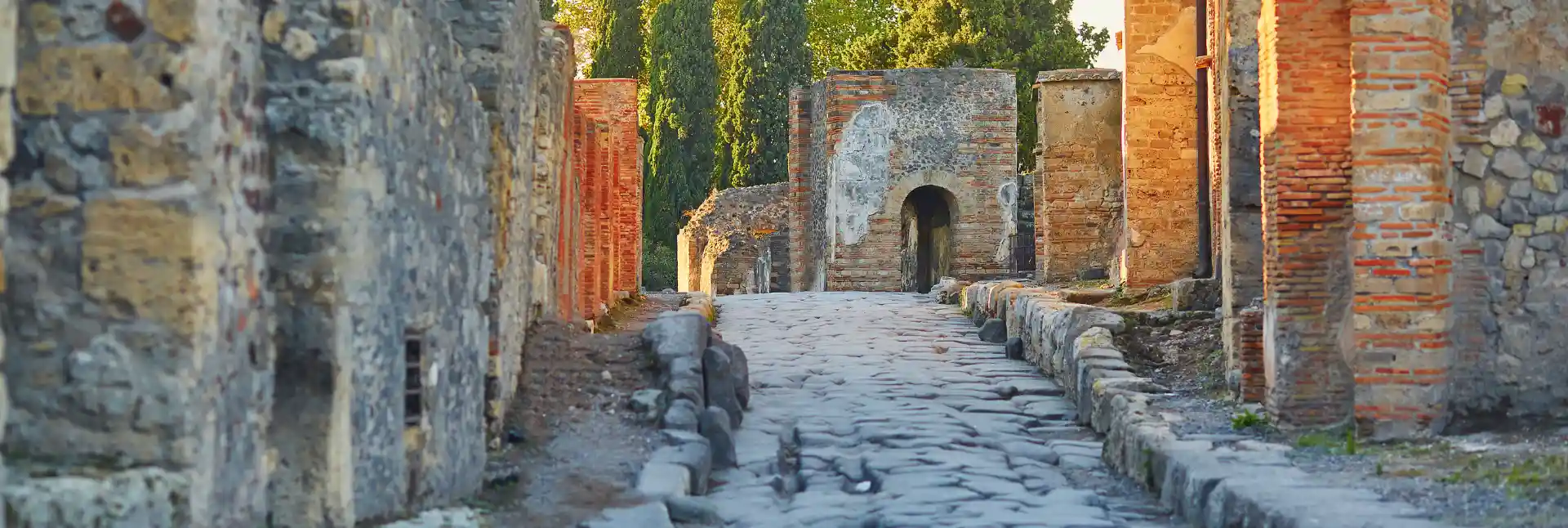
During the visit, this difference is immediately noticeable. In Herculaneum, we enter multi-story houses, see balconies, and feel a striking closeness to everyday Roman life. Pompeii, for its part, impresses with its scale and the magnitude of the tragedy, but due to collapses, it does not offer the same vertical perspective as Herculaneum.
Size and visiting time: planning is essential
Another key factor for any traveler is time. Pompeii is vast. Exploring it in full can easily take between five and seven hours, or even longer if done at a relaxed pace and with a guide who provides context for each space. For this reason, we always stress the importance of planning your route before entering, especially if time is limited. To see the most famous highlights, you may need around 2 to 3 hours.
Herculaneum is much more compact. In about two to three hours, you can enjoy a complete and in-depth visit.
This difference also affects the emotional experience. Pompeii can feel overwhelming due to the sheer volume of what it offers. Herculaneum invites closer observation, encouraging visitors to imagine domestic life and focus on details. Neither experience is better or worse—they are simply different and can be combined for a richer visit.
Daily life, art, and architecture: two complementary perspectives
In terms of content, Pompeii is a living city frozen in time. You will find taverns with their counters, political graffiti, brothels, bakeries, and large public spaces. It is ideal for understanding how a medium-sized Roman city functioned, with all its social contrasts.
Herculaneum, by contrast, reveals the private life of Roman elites. Its houses are richly decorated, with high-quality frescoes and refined mosaics. The architecture is more vertical, with multiple levels and well-defined domestic spaces.
Artistically, there are also differences between Pompeii and Herculaneum. Both sites are essential, but they offer distinct readings: Pompeii shows art as a social and public tool; Herculaneum presents it as an expression of luxury and private status.
Accessibility and visit organization
From a practical standpoint, tickets for Pompeii and Herculaneum are managed independently, with different opening hours and pricing. Pompeii has multiple entrances and more extensive tourist infrastructure, while Herculaneum is simpler to navigate.
This is where buying your tickets through specialists truly makes a difference. If you are planning your trip to Pompeii and want to experience this city in depth and with meaning, we will be delighted to assist you.